Do Kids Need Eye Exams If They Passed a School Vision Screening?
Your child passed the school vision screening, and the nurse sent home a note saying everything looks fine. It might seem like you can relax, but a school screening is different from a full eye exam. Passing the screening does not always mean your child’s vision is completely healthy. Here’s why.
What Are Eye Exams, and What Do They Entail?
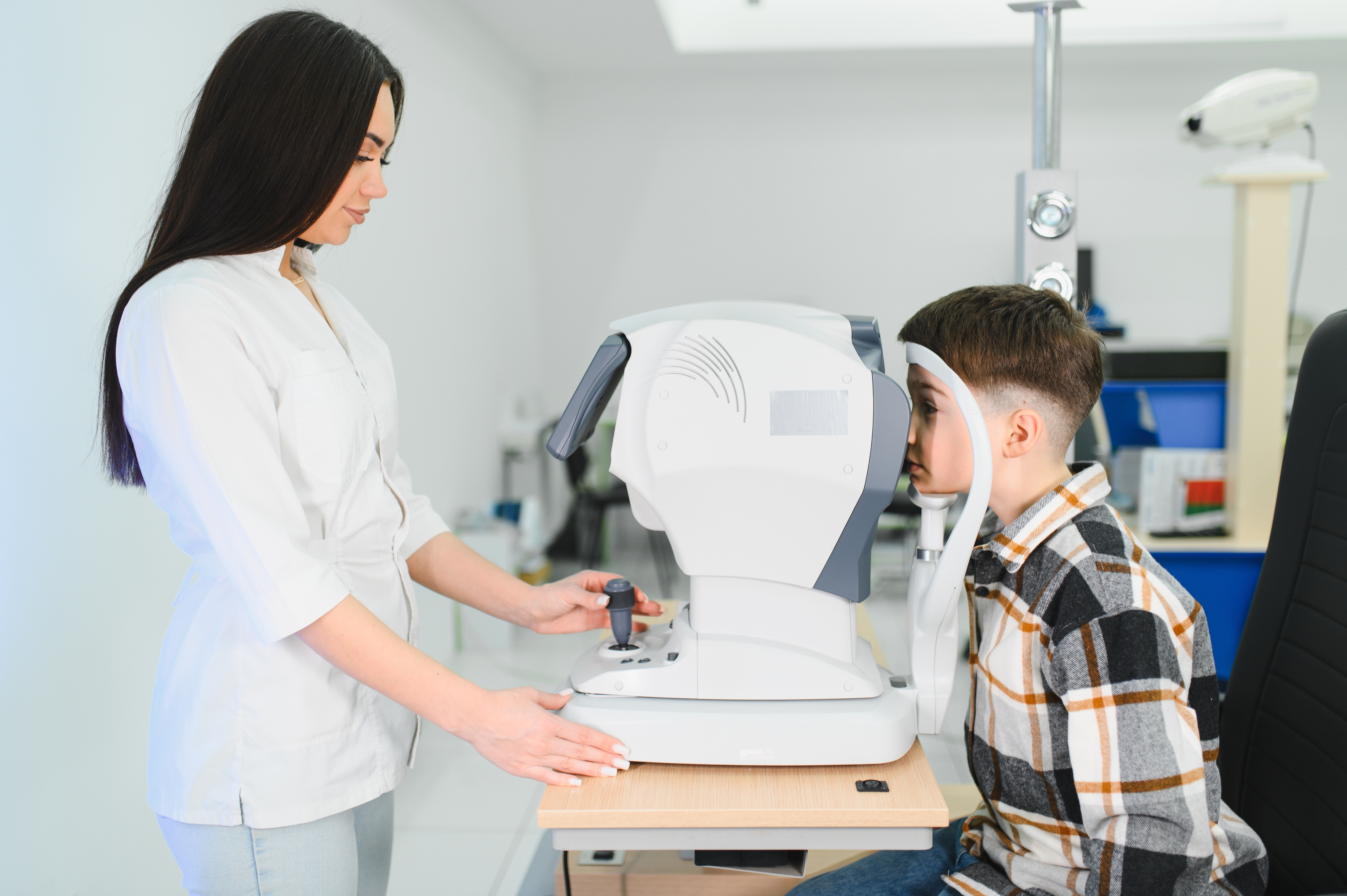
This eye exam is not a quick check; it is a thorough examination done by an eye doctor. It can take an hour or more, and it uses specialized equipment to look at every aspect of your child’s vision and eye health.
The doctor will check distance vision and near vision for reading. They will assess how well the eyes focus, track moving objects, and work together as a team. These skills are essential for learning, and problems in these areas can make reading exhausting even when distance vision is perfect.
The doctor will also examine the eyes. They will examine the retina, optic nerve, and other internal structures using specialized instruments. Some eye diseases have no early symptoms. A child can have healthy distance vision while a problem is developing inside the eye. A comprehensive exam catches those issues early.
Eye doctors may also use drops to dilate the pupils. This gives them a wider, clearer view of the internal structures. It is a standard part of a complete exam and helps ensure nothing is missed.
What Does It Mean to Pass a School Vision Screening?
A school vision screening is a quick check, usually done by a school nurse, a teacher, or a volunteer. The main tool is often a basic eye chart, the same kind invented over 150 years ago. It checks how well your child sees letters or symbols from a distance. It simply flags kids who may have an obvious problem, such as nearsightedness.
Screenings can be useful for catching some issues, but they are not thorough. The setting is often not ideal. The lighting might be wrong. The distance might not be exact. The person administering it may not have formal training. All of this can affect the results.
Passing a screening means your child’s distance vision met a basic standard on that day in that setting. It does not mean a doctor has examined their eyes. It does not mean all aspects of their vision are working well. And it does not mean their eyes are healthy.
Do Kids Need Eye Exams Despite Passing School Vision Screening?
Yes. Absolutely.
Here is why: A child can have 20/20 distance vision but still have a vision problem that affects learning. Some children lose their place while reading, get headaches later in the day, or avoid reading because it makes their eyes tired. These are not behavior problems; they are vision problems, and a school screening will not find them.
About one in four children has a vision problem serious enough to affect learning. Many of these children still pass a basic screening. That is why eye doctors recommend full exams, even for kids who seem to see well.
Eye doctors recommend that children have their first full eye exam around age three. Another exam should be done before kindergarten, at about age five or six. After that, yearly checkups are best.
Some children need exams earlier or more often. This includes kids born early, those with a family history of eye disease, or those with certain medical conditions like Down syndrome. If you notice your child squinting, rubbing their eyes often, tilting their head, or complaining of headaches, do not wait for the next screening.
To learn more about children’s vision needs, visit Borealis Eye Care in Ramsey, Minnesota, or call (763) 250-9742 to make an appointment.
https://www.aao.org/eye-health/tips-prevention/children-eye-screening
Quick Links
Helpful Articles
article_category: products
article_category: psychiatry
article_category: faqs
article_category: cats
article_category: general
article_category: services
article_category: technology
article_category: dogs
article_category: restorative
article_category: vision therapy
article_category: contact lenses
article_category: health
article_category: conditions
article_category: eye surgery co-management
article_category: exotic
article_category: cosmetic
article_category: surgical procedures
article_category: aesthetics
article_category: preventative
article_category: ocular disease management
article_category: eyeglasses
article_category: eye health
article_category: large animal
[]
article_category: psychiatry
article_category: faqs
article_category: cats
article_category: general
article_category: services
article_category: technology
article_category: dogs
article_category: restorative
article_category: vision therapy
article_category: contact lenses
article_category: health
article_category: conditions
article_category: eye surgery co-management
article_category: exotic
article_category: cosmetic
article_category: surgical procedures
article_category: aesthetics
article_category: preventative
article_category: ocular disease management
article_category: eyeglasses
article_category: eye health
article_category: large animal
[]
Flowbite is an open-source library of interactive components built on top of Tailwind CSS including buttons, dropdowns, modals, navbars, and more.
Check out this guide to learn how to get started and start developing websites even faster with components on top of Tailwind CSS.
All Eye Care Services
Find personalized eye care excellence with our comprehensive services. From eye exams to advanced diagnostics, trust us for all your vision needs.
Keep In Touch
For non-urgent questions or to learn more about our services, contact us today!
© 2026 Borealis Eyecare. All rights Reserved - Accessibility Statement - Privacy Policy - Sitemap
Managed and Designed by 